
A common misconception among clients considering their first yacht interior design is that designing a yacht is simply an extension of luxury residential design. While both demand beautiful spaces and exceptional craftsmanship, life at sea presents an entirely different set of challenges.
From the moment a yacht leaves the dock, every surface is exposed to conditions that most homes will never experience. Salt air, humidity, UV exposure, vibration, and constant movement all influence how materials perform over time. A finish that looks flawless in a residence may quickly fade, warp, corrode, or even completely fail in a marine environment.
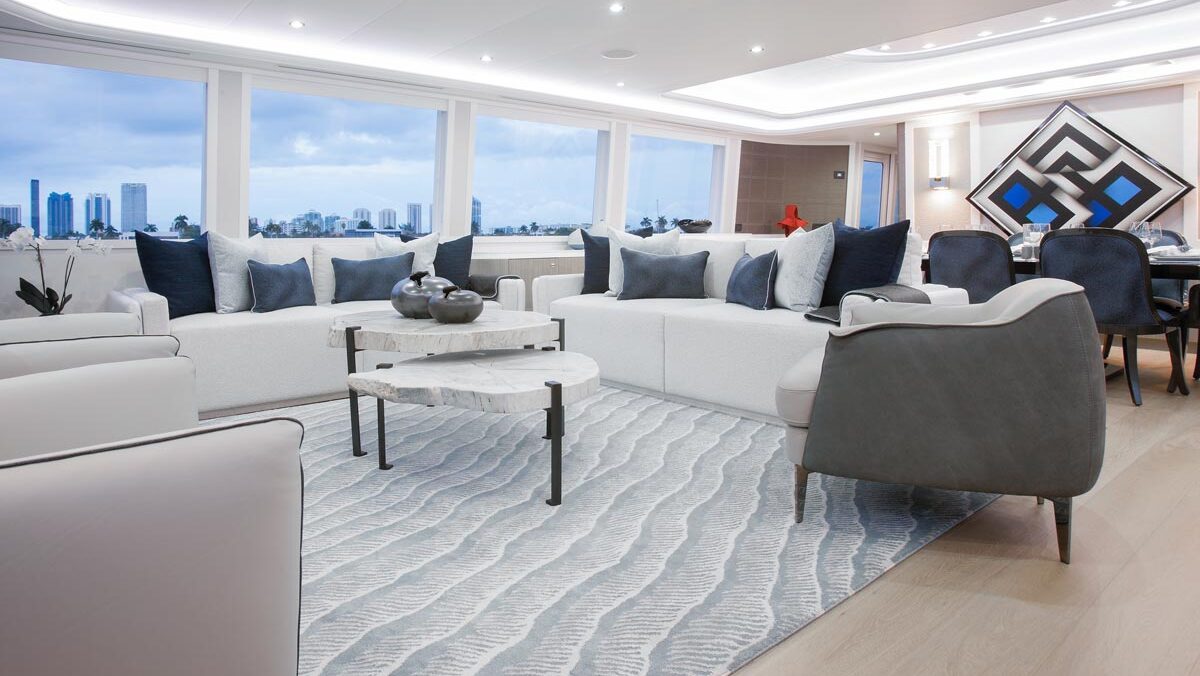
Another important consideration is how the yacht will be used. Materials selected for a private owner’s vessel may differ significantly from those specified for a charter yacht, where surfaces must withstand continuous guest use, frequent cleaning, spills, luggage, and the demands of a commercial operation without compromising luxury or style.
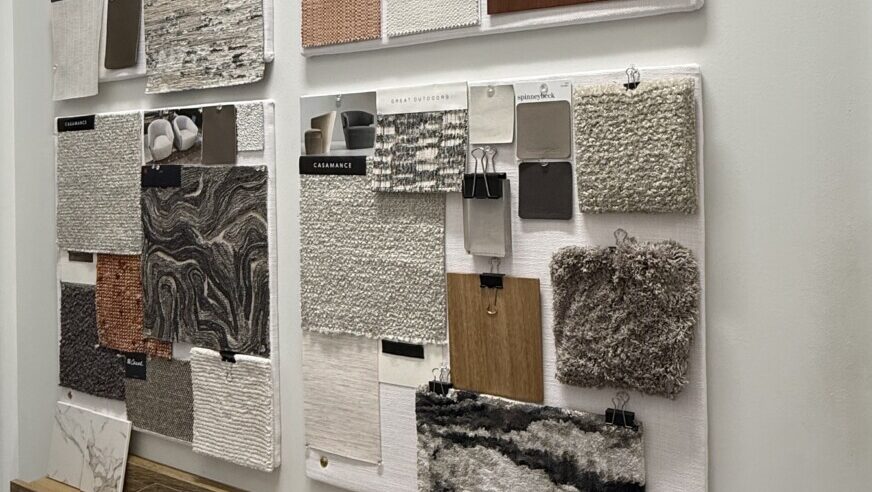
At Destry Darr Designs, material selection is one of the most important decisions we make. Every finish is chosen not only for its beauty, but also for its ability to withstand life on the water. Let’s dive in to the specifics.

SALT WATER CHANGES EVERYTHING
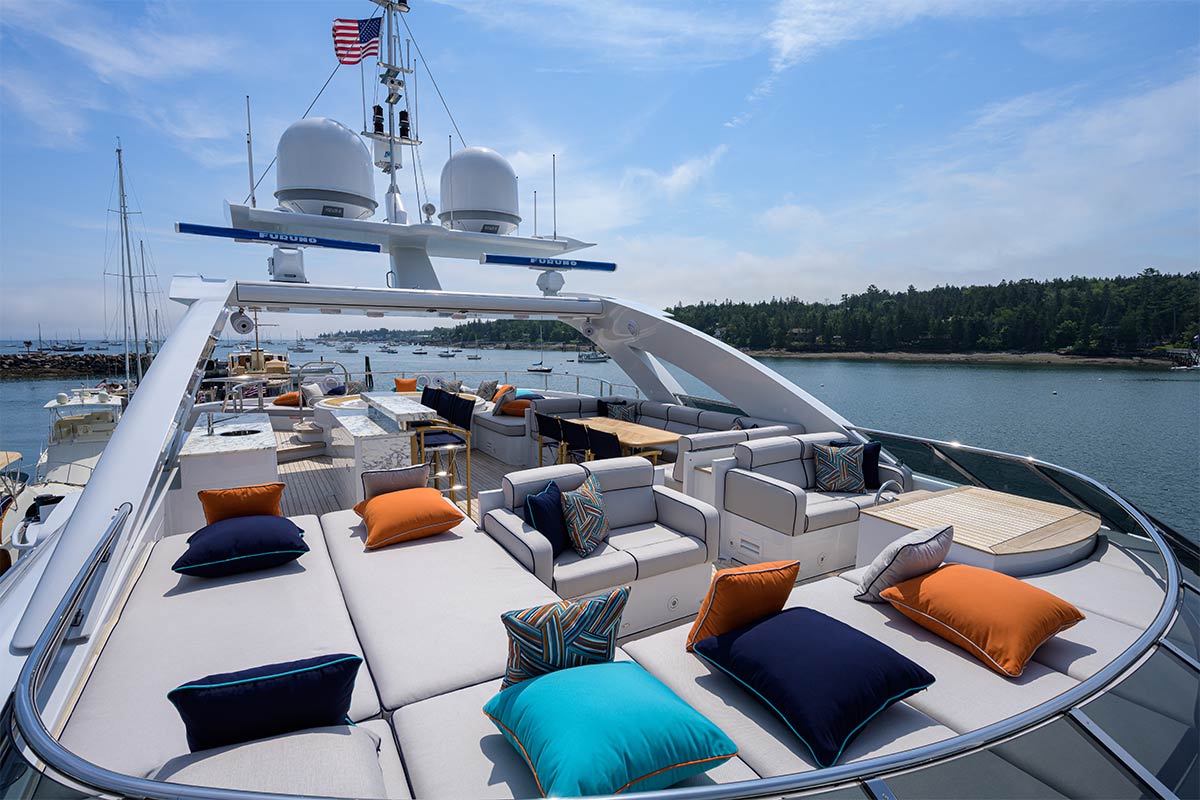
A yacht operates in one of the harshest environments imaginable. Salt air accelerates corrosion, humidity affects wood and fabrics, and continuous UV exposure can discolor or degrade surfaces.
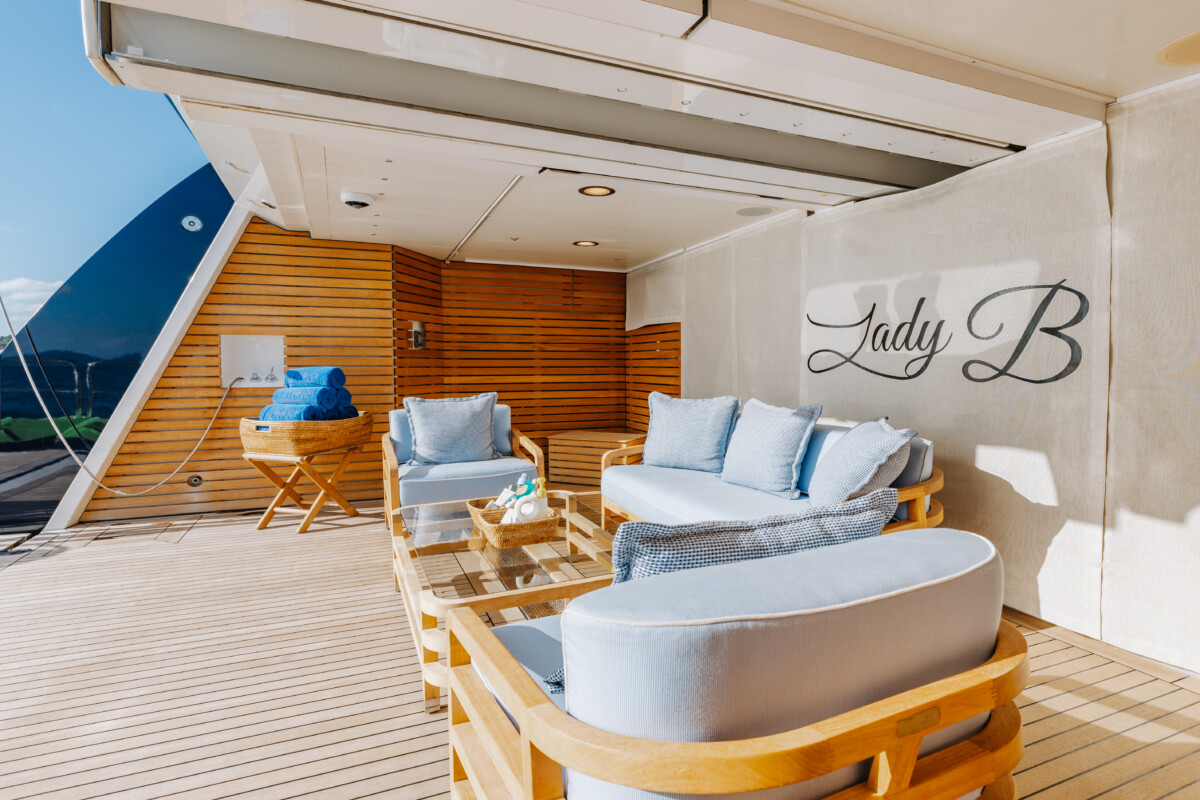
This can influence everything from the metal specified for decorative hardware to the fabric selected for an area exposed to direct sunlight. Exterior upholstery, for example, may require solution-dyed, UV- and mildew-resistant performance fabrics, while metal finishes and hardware need to be selected with corrosion resistance in mind. Wood species, veneers, sealants, and finishes must also be considered for their ability to withstand fluctuations in temperature and humidity.
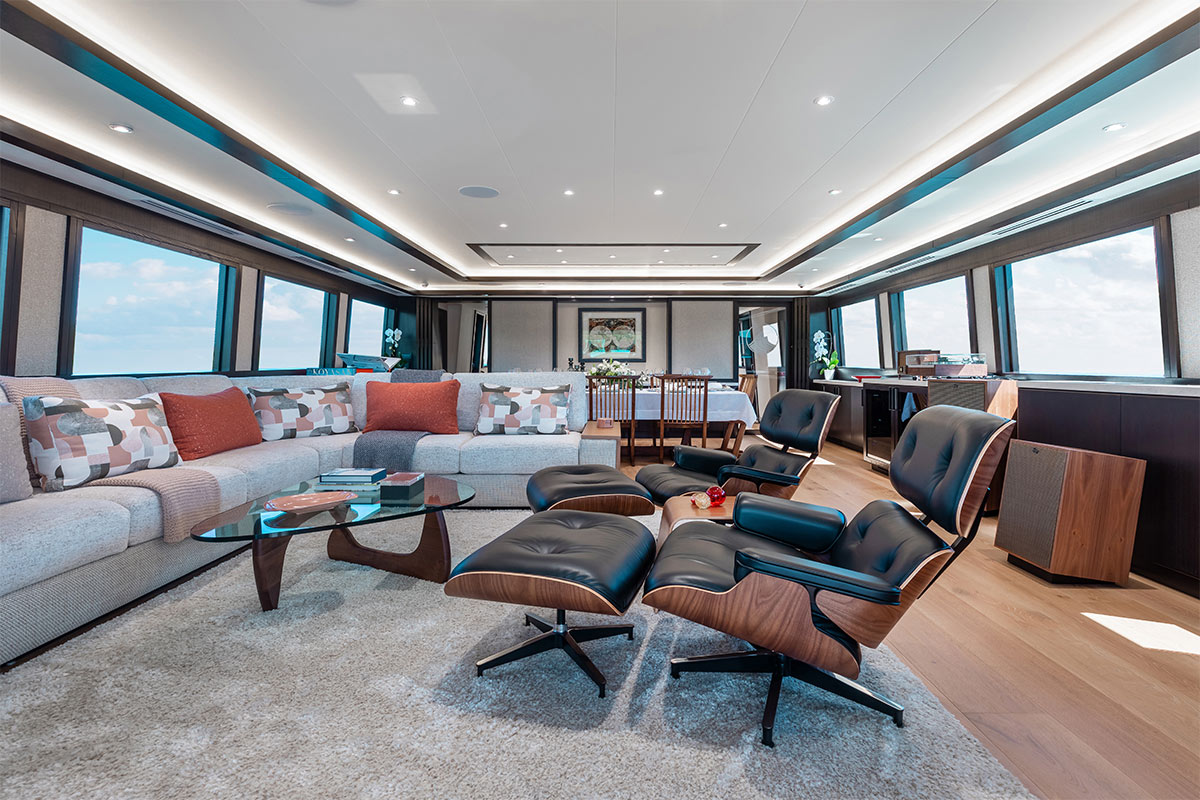
Selecting marine-appropriate materials, such as aboard the 172′ Benetti Lady B, ensures that every space maintains its beauty season after season while reducing long-term maintenance and replacement.
MOVEMENT MATTERS
Unlike a home, a yacht is always in motion.
Whether underway or at anchor, vibration, flexing, and shifting place constant stress on cabinetry, hardware, flooring, adhesives, and finishes. A large stone slab or rigid architectural detail that poses little concern in a residence, for example, requires much more consideration aboard a moving vessel. The substrate, attachment method, joints, adhesives, and weight all become part of the design decision.
The same applies to furniture and decorative objects. Pieces may need to be secured, cabinetry requires appropriate latching, and artwork and accessories must be installed with movement in mind. Even something as seemingly simple as a table lamp needs to be considered differently at sea.
PRIVATE YACHT VS CHARTER YACHT
How a yacht is used plays an equally important role in the design process.
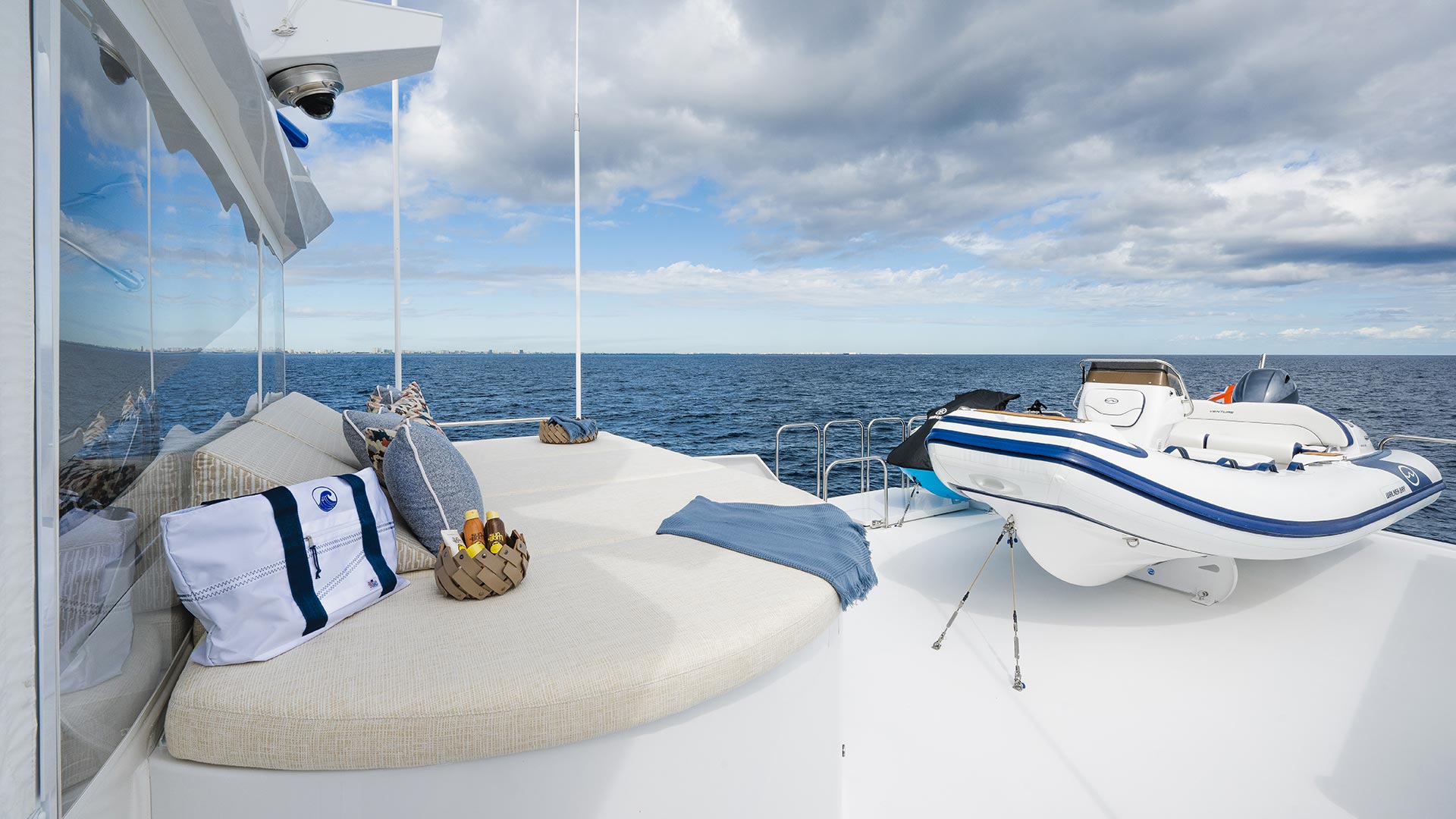
A private owner’s yacht may allow for more bespoke or delicate materials, while a busy charter yacht requires finishes capable of standing up to frequent guest turnover, luggage, spills, and continuous cleaning without sacrificing sophistication.
On a charter yacht, we may favor stain-resistant upholstery, durable wallcoverings in high-traffic corridors, resilient flooring, and countertop materials that tolerate repeated cleaning. On the 126′ Feadship Calypso, for example, we incorporated performance-driven textiles and easily cleanable finishes into the refit because the yacht maintains an active family program while also being available for charter.
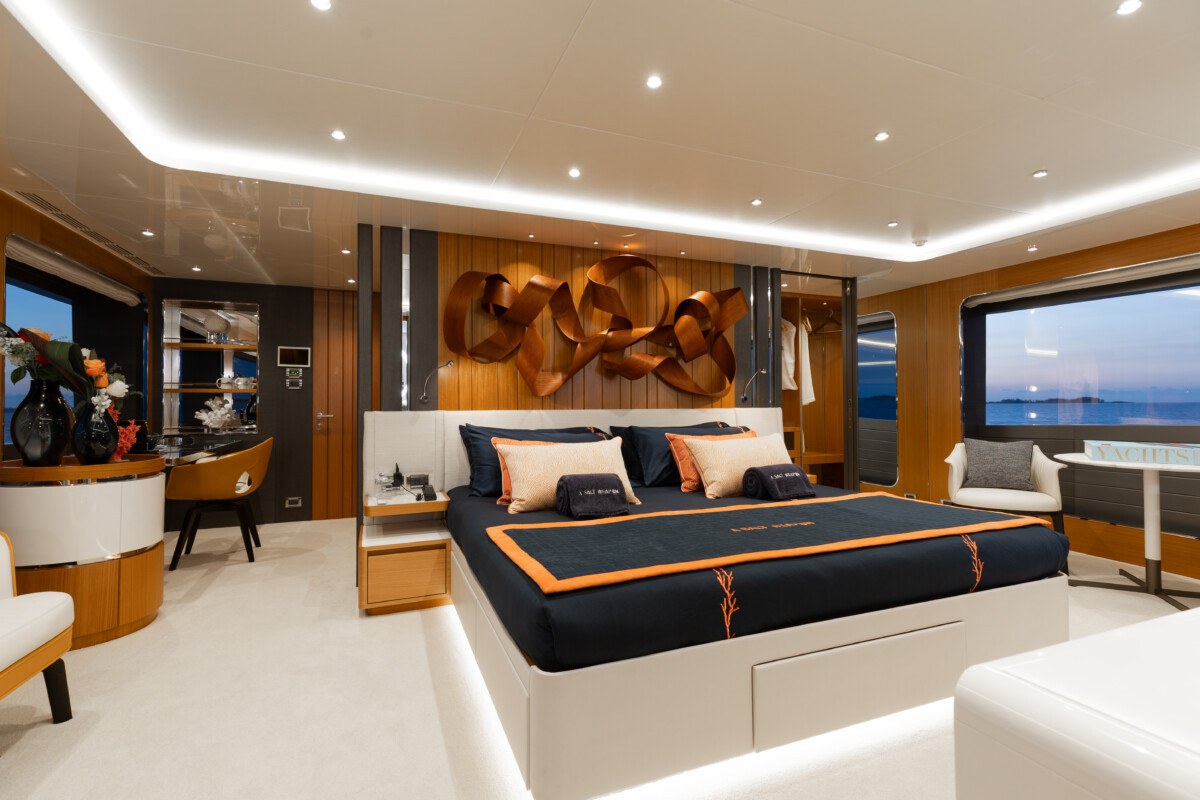
Aboard the 112′ Westport Emilia, we worked closely with the owner to incorporate very specific elements into the design that work for a private yacht, but would not be recommended for a charter yacht.
Selecting the right materials helps preserve the yacht’s appearance while minimizing downtime for repairs or replacement.
WEIGHT IS A DESIGN DECISION
Onboard a yacht, every pound matters.
From natural stone and flooring to furniture and decorative elements, material choices must balance aesthetics, durability, and weight. A designer may love the appearance of a substantial slab of marble, for example, but depending on its location and application, a lightweight stone panel or veneer may achieve the desired effect with considerably less weight.
Furniture construction can be approached similarly. What appears to be a substantial piece may incorporate lightweight substrates or carefully engineered construction beneath the finished surface.
These decisions are particularly important when multiple materials are being specified throughout a vessel. Individually, the difference may seem insignificant. Collectively, those pounds add up, making weight an integral part of the design process rather than an afterthought.
MARINE GRADE MEANS MORE THAN DURABILITY
Marine-grade materials are specifically engineered for life at sea.
Depending on the application, that can mean resistance to corrosion, moisture, UV exposure, mildew, staining, or repeated cleaning. Materials may also need to satisfy applicable marine fire and safety requirements.
Even the elements guests never see matter. The adhesive beneath a floor, backing behind a wallcovering, substrate beneath stone, protective finish on a wood veneer, or hardware inside a cabinet can be just as important to longevity as the decorative surface itself.
A beautiful material is only successful if the entire system supporting it performs properly in the marine environment. These technical considerations happen largely behind the scenes, but they are essential to creating yacht interiors that remain beautiful and dependable for years to come.
LUXURY THAT LASTS
Creating an exceptional yacht interior isn’t simply about choosing beautiful finishes. It’s about understanding how every material will perform in one of the world’s most demanding environments.
At Destry Darr Designs, we carefully evaluate every specification for aesthetics, durability, functionality, weight, maintenance, and the unique way each yacht will be used. From performance textiles aboard an active charter yacht to carefully engineered stone, custom furnishings, marine-appropriate hardware, and finishes selected to withstand salt, sunlight, and humidity, every choice has a purpose.

LET’S CREATE SOMETHING BEAUTIFUL
Planning a new build or refit? Contact Destry Darr Designs to discuss how thoughtful material selection and experienced yacht interior design can help create an interior that is every bit as practical as it is beautiful.

Contact Destry at destry@destrydarrdesigns.com to schedule a consultation today!